
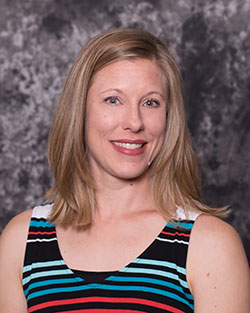
Amy Nevius
Contact Information:
Amy Nevius
Phone:
(405) 206-3293
Email:
Discipline:
Dance & Creative Movement
Participants:
Early Childhood, Elementary, Middle School, Hight School, Adults, Educators, Older Adults, Youth with Disabilities, Adults with Disabilities, At-risk Youth
Settings:
Schools: Pre-k, Elementary, Middle School, High School, Alternative Education
Community Sites: Parks & Recreation Centers, Arts Centers, Childcare Centers, Libraries, Senior Centers, Health Care Facilities
Availability:
Statewide, Year-round
Bio:
Amy Nevius has worked to bring arts education in the form of dance and creative movement to a wide range of participants throughout the state of Oklahoma through artist-in-residence programs, master classes, workshops, arts camps, staff development sessions, seminars, adjudications, committee service, performances, and guest choreographer positions. Believing that individuals learn best through the application of the arts in various formats, she works collaboratively with artists of other mediums, to bring multi-faceted arts curriculum to participants of all ages and abilities.
Nevius completed her undergraduate studies with a Bachelor of Arts in Dance Education from the University of Central Oklahoma. She currently serves as Adjunct Faculty for the Department of Dance at the University of Central Oklahoma as well as the Humanities and Social Sciences Division at Rose State College. Additionally, Nevius is the resident choreographer for all theatre productions produced by Rose State College Theatre and is a 2022 Excellence in Teaching Award Recipient from the college. She has served on the Dance Standards Writing Committee and the Fine Arts Advisory Committee for the Oklahoma State Department of Education.
In addition to her work in arts education, Nevius is also a professional dancer, aerialist, and choreographer. A founding member of Perpetual Motion Dance, Nevius loves the challenge of creating intricate choreography through modern and aerial dance. Her professional performances and choreography have been a part of numerous concerts, festivals, theatre productions, and arts-centered events throughout Oklahoma, Texas, Kansas, Arkansas, New Mexico, and California. “The Big Voices Project (2023)” marks Nevius' first production as Artistic Director of Perpetual Motion Dance.
Learning Goals:
Through guided creative movement activities, participants will learn dance fundamentals and explore the elements of body, energy, space, and time to create and perform original dance compositions.
Participants will:
- Recognize dance as an art form and use movement as a tool to express an idea or feeling.
- Understand that dance can improve one's strength, flexibility, balance, and coordination.
- Demonstrate respect for movements created and/or performed by their peers.
- Gain a working knowledge of terminology specific to basic elements of dance.
- Learn to identify and execute locomotor and non-locomotor movements.
- Learn to incorporate the use of different levels (low, medium, and high) for movement.
- Experience and utilize different dynamic qualities (heavy/light, quick/slow, direct/indirect) of movement.